Decoding the Desk Next Door: A Field Manual for the First Week With a New Executive
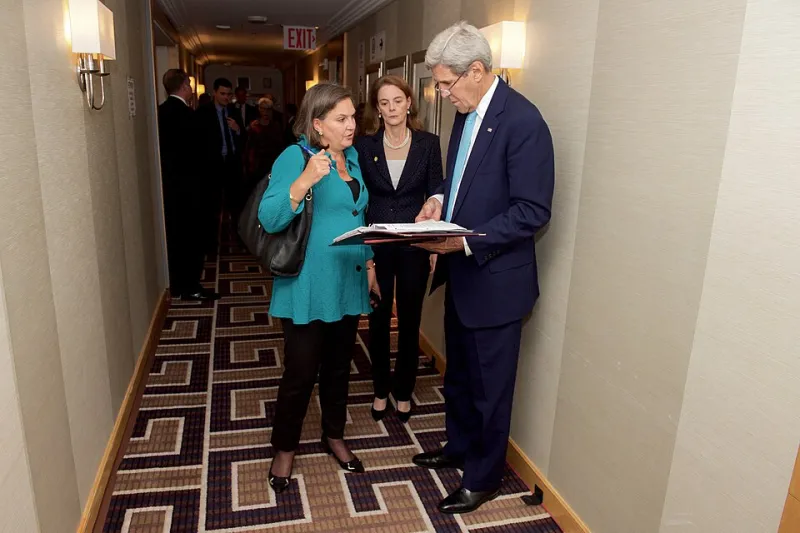
Photo: U.S. Department of State from United States, Public domain, via Wikimedia Commons
Every seasoned executive assistant knows the feeling: a new leader arrives — whether through an external hire, an internal promotion, or a reorganization — and within a fortnight the entire rhythm of your workday is quietly rewritten. The question is never whether the relationship will develop a pattern. The question is whether you will help author that pattern or simply absorb it.
The most effective senior EAs treat the first week as a diagnostic window. Not a waiting period. A window.
Why the Opening Days Matter More Than You Think
Working relationships harden quickly. The assumptions an executive forms in week one — about your judgment, your communication preferences, your appetite for autonomy — tend to calcify into fixed expectations by month three. Correcting a misread later requires awkward conversations that early calibration would have made unnecessary.
Think of it like an American homeowner inspecting a house before closing. You would never buy without looking in the basement. Yet assistants routinely enter multi-year partnerships without ever inspecting the fundamentals: how does this person process information, make decisions, handle disagreement, and define "urgent"?
The Diagnostic Questions That Surface Everything
Somewhere between day two and day five, request thirty minutes for what you can frame as a "working sync." Come armed with questions that do double duty — they gather intelligence while signaling your strategic intent.
- "When a problem lands on your desk, do you want it accompanied by options, or just the facts?" This single question reveals whether you are working with a delegator or a detail-dweller.
- "What does a good day at work look like for you?" The answer exposes priorities, pet peeves, and the metrics by which your performance will silently be judged.
- "How do you prefer to receive bad news — immediately, with context, or after I've scoped a solution?" Every executive answers differently, and the difference is career-defining.
- "What did your best assistant do that you valued most?" This is the master key. You are being handed the grading rubric directly.
Ask these in writing afterward in a brief recap email. The document becomes a shared reference point — and, quietly, evidence of your professionalism.
Observation: The Unspoken Diagnostic
Questions get you the stated preferences. Observation gets you the real ones. Executives, like all of us, rarely behave as they claim to.
Spend the first week watching three things with deliberate attention.
How they use the calendar. Do they guard focus blocks or treat every gap as bookable? Do they run late as a matter of course? Their relationship with time dictates yours.
How they handle interruption. Note what actually pulls their attention mid-meeting — a Slack ping, a knock on the door, a phone buzz. You are learning which channels carry real urgency and which are theater.
How they respond to being told no. Early on, you will have occasion to push back on something small — a double-booked flight, an unrealistic turnaround. Their reaction is a low-stakes preview of every high-stakes pushback to come.
Keep a private log. Patterns emerge within days, and documented patterns are far easier to design around than vague impressions.
Scripts for the Conversations That Prevent Friction
Some assistants avoid early expectation-setting conversations because they fear seeming presumptuous. The antidote is framing. You are not demanding accommodations; you are proposing an operating agreement.
Instead of: "I need to know how you like your travel booked."
Try: "I've put together a proposed workflow for travel and expenses based on what I've seen work well — I'd love your edits so we're aligned from the start."
Instead of: "How much do you want me to shield you?"
Try: "My default will be to protect your focus time and triage inbound requests. Tell me if you'd rather I calibrate that differently."
The second versions accomplish two things simultaneously: they establish you as a systems thinker, and they convert silent adaptation into explicit agreement. Friction in executive relationships almost always stems from unstated expectations. Explicit ones cost you nothing.
Co-Design, Not Compliance
The through-line of every strong EA-executive partnership is the same: the assistant acted early, asked precise questions, and proposed structure rather than waiting for it to be imposed. The executives in these partnerships consistently describe their assistants not as support staff but as the person who "made the whole operation legible."
A new executive is not a puzzle to be solved from a distance. They are a counterpart in a relationship that will define a significant chapter of your career. Read them carefully in the first forty-eight hours — then take the pen and start writing.